A regional proposal for the East African Community
From commitments toimpact.
The East African Community has the resolutions. Elimu Moja is the machinery that turns them into
changes a child in a classroom in Juba, Bujumbura, Kisumu or Mogadishu can feel: a shared scorecard,
a common foundational learning framework, a teacher qualification passport, and one regional data warehouse.
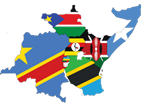
One region. Eight flags. One system. Elimu Moja proposes a thin regional layer of shared standards,
shared data and shared services across Kenya, Tanzania, Uganda, Rwanda, Burundi, South Sudan, Somalia
and DR Congo. The colour band above is drawn from their flags, and runs through this whole page.
8
partner states: eight ministries, eight curricula, eight teacher services, eight data systems
~8 in 10
ten-year-olds in Sub-Saharan Africa cannot read and understand a simple story (World Bank, 2022)
~15M
additional teachers Sub-Saharan Africa needs by 2030 for the SDG 4 targets (UNESCO)
0
mutual recognition agreements for teachers, against four for other professions (EAC Common Market Protocol)
The problem
The region keeps agreeing, and staying stuck
East Africa does not lack ambition or evidence. It lacks the shared plumbing that would let a
commitment made by ministers travel down to a district officer, a head teacher, a parent, and back
up again as data. Everything is standalone.
Select a country on the map, or a problem tag, to see where it bites.
Curriculum transformation without teacher transformation cannot succeed. Teachers should be treated as a
community of East African professionals, not only as national employees.
Paraphrasing remarks by the EAC Cabinet Secretary at the conference
What has to be fixed
The gap map
A live register of what a unified system has to close, drawn from the conference floor, this brief and
the advisory review. Every tile, bar, cell and block below is a filter, and the whole board, the
projection and the cards recompute together.
Register · 29 entries · static snapshotview recomputed on load
29/ 29
gaps in view
of the full register
8
critical, fix now
8 critical, 15 high, 6 moderate
9
building blocks engaged
of 9 that answer the register
7
worked in year one
roadmap Phase 1, months 0 to 12
17
added by the review
beyond the floor and the brief
Gaps by domain
Select a bar to filter the register by domain.
By source
Where each gap was first raised.
Domain by source
Full register. Select a cell to filter by that domain and source.
Answered by
Which of the nine building blocks carries each gap. Select a bar to filter.
The roadmap over time
A projection of the gaps in view: how many stay open as each roadmap phase is delivered. Not a filter.
Severity
Source
Domain
Phase
Gap register
Conference floorLearning
No shared definition of foundational proficiency
Foundational literacy and numeracy was the lead sub-theme, yet each state sets its own bar. Citizen-led tools (Uwezo, PAL Network ICAN and ICAR) and national assessments are not equated.
System response A common minimum-proficiency standard for reading and numeracy in the Foundational Learning Framework, aligned to the Global Proficiency Framework and the Continental Assessment Framework for Africa.
This briefLearning
Foundational learning is not integrated across the region
Social emotional learning, data and evidence, and ICT integration are each addressed somewhere, but no single framework carries them together with a clear roadmap.
System response The EAC Foundational Learning Framework: three pillars, a playful pedagogy spine, a competency crosswalk, and a pre-primary to upper-primary progression.
Advisory review addsLearning
Early childhood is treated as optional
Foundational learning starts before Grade 1. Pre-primary access, financing and workforce are the weakest and least harmonised part of every system. A conference session asked directly whether the region intervenes too late.
System response Pre-primary is the first rung of the progression, with a minimum service definition and a costed pre-primary workforce plan in the scorecard.
Advisory review addsLearning
Language of instruction policy diverges, and there is a book famine
Kiswahili, English, French and Arabic are all languages of instruction across the eight states, with different mother-tongue transition years. Decodable and levelled readers in local languages are scarce. This alone breaks a common learning metric and cross-border mobility.
System response A regional language-of-instruction protocol with shared transition principles, assessment offered in the language of instruction, and a pooled local-language decodable-reader library in the commons.
Advisory review addsLearning
Over-age and out-of-school children are missed
A curriculum-paced, school-based system does not reach the millions who are over-age or out of school. Teaching at the Right Level and accelerated programmes exist but are not a regional entitlement.
System response A regional catch-up and accelerated-learning standard, and household-based assessment so out-of-school children still count.
Conference floorTeachers
Teacher development is episodic and uneven
Sessions repeatedly contrasted one-off training with sustained, school-based support. Quality of continuous professional development varies widely by state and by district.
System response A regional teacher competency standard, a tiered professional pathway, and digital communities of practice built into the passport.
This briefTeachers
No recognised "East African teacher"
There is no shared brand, standard or credential that says a teacher is qualified to practise anywhere in the Community, or to serve as a trainer of trainers across borders.
System response The Teacher Qualification Passport: a universal competency assessment leading to a portable, tiered credential.
Advisory review addsTeachers
No teacher mutual recognition agreement
The EAC has concluded mutual recognition agreements for accountants, engineers, architects and veterinary surgeons under the Common Market Protocol. There is none for teachers, the largest regulated profession in the region.
System response A Teachers MRA drafted against the Continental Teacher Qualification Framework, with the passport as its instrument.
Advisory review addsTeachers
Teacher registries cannot talk to each other, and fraud is hard to catch
Eight teacher services, no shared registry, no common way to verify a certificate issued in another state or to detect a fabricated one. Kenya's qualifications authority has flagged more than 10,000 fake certificates. There is also no shared misconduct list, so a teacher barred in one state can re-register next door.
System response A federated teacher registry index, a credential-verification service, and a binding cross-notification alert when any teacher is struck off.
Advisory review addsTeachers
Mobility could drain the poorest districts
A passport that eases movement, without deployment incentives or portable benefits, can pull teachers from rural, arid and refugee-hosting areas that are already chronically understaffed. Kenya and Tanzania train more teachers than they hire while South Sudan and Somalia face acute shortages. Pensions and social security do not follow a teacher across a border.
System response Hard-to-staff service is a passport tier requirement, plus a totalisation arrangement so benefits follow the teacher, and a regional deployment facility that routes surplus to deficit.
This briefData and AI
No single regional data warehouse
Data lives in country silos. There is no one place where a minister, a researcher, a district officer or a citizen can get a comparable regional number when they need it.
System response A federated regional warehouse: states keep custody of their data, a shared semantic layer makes it comparable, three access tiers govern who sees what.
This briefData and AI
Data does not become decisions
Even where data exists it rarely reaches a policy choice, a budget line or a tracked commitment.
System response An indicator to insight to brief to commitment to impact workflow, with an AI assistant that answers in plain language and cites the source indicator.
This briefData and AI
AI is arriving in classrooms with no safety floor
Tools reach schools ahead of infrastructure, teacher capacity, and any shared rule on children's data or age-appropriate design.
System response A regional AI-in-classrooms safeguarding standard built on the UNESCO guidance and the AU Continental AI Strategy, plus a procurement checklist.
Advisory review addsData and AI
Child-data protection is not harmonised
Kenya, Uganda, Rwanda and Tanzania have data protection laws and authorities; South Sudan has none yet; others are weaker. A cross-border store of minors' data needs a common child-data rule and a lawful transfer route.
System response A child-data minimisation standard, aggregation thresholds, and alignment to the EAC cross-border data flows mechanism.
Advisory review addsData and AI
The middle tier has data it cannot use
District and county officers are where reforms stall. They lack dashboards, comparisons and the capacity to act on evidence. Conference evidence called the middle tier the engine of school improvement.
System response A middle-tier dashboard as a first-class product of the warehouse, not an afterthought, plus a data-use capability track.
This briefMobility and equivalency
Cross-border teaching is not practical
The vision is a teacher in one state teaching confidently in another. Today that is blocked by recognition, registration and standards.
System response Passport plus Teachers MRA plus a regional supply-and-exchange platform for placements and secondments.
Advisory review addsMobility and equivalency
No equivalency table for mobile and displaced learners
The region shared an East African Certificate of Education and a common examinations council until the mid-1970s. Today higher education has a credit transfer system and basic education has nothing. A child moving between states, or a refugee from South Sudan or Somalia, is placed by guesswork.
System response A basic-education equivalency matrix by grade and phase, a lightweight examinations-equating function, and a portable learner record.
Advisory review addsMobility and equivalency
School years and exam calendars do not line up
Different academic calendars and national examination windows make joint assessment, teacher exchange and shared resources hard to schedule.
System response A published regional assessment calendar and a phased move toward compatible term structures.
Conference floorEquity and inclusion
Children with disabilities are unseen and unassessed
Multiple sessions showed learners with disabilities excluded from assessment entirely, so they are invisible in the data and in planning.
System response A regional inclusive-assessment toolkit and accommodations standard, and disability-disaggregated indicators in the scorecard.
Advisory review addsEquity and inclusion
Crisis and refugee education is treated as an exception
South Sudan, Somalia and eastern DR Congo face protracted crises, and Uganda, Kenya, Tanzania and Ethiopia host large refugee populations. Somalia has roughly 58 percent of children out of school. Refugee-teacher certification and learning continuity across borders sit outside the steady-state system, and outside the IGAD Djibouti Declaration architecture the same states are already bound by.
System response Crisis contexts are a design case throughout: portable learner records, refugee-teacher certification routes, low-tech delivery in the framework, and explicit interoperability with the IGAD Djibouti Declaration on Refugee Education.
Advisory review addsEquity and inclusion
Gender parity is measured, gender outcomes are not
Enrolment parity can hide gaps in completion, safety and results. The conference pushed for gender-transformative approaches with accountability, not slogans.
System response Outcome and safety indicators disaggregated by sex, with a comply-or-explain line in the scorecard.
This briefEquity and inclusion
Parents, learners and communities are not really engaged
Engagement stops at the school gate. The Ubuntu principle, I am because we are, is stated but not operationalised in how the system talks to families.
System response A stakeholder engagement model with a defined information path down to parents and community organisations, and learner and parent voice in the scorecard.
This briefSystem and financing
Information does not flow after the conference
There is no structured route from the Secretariat and ministers, through government officials, to non-governmental and community-based organisations working in education.
System response A published dissemination architecture and a live communiqué tracker: every resolution has an owner, a milestone and a status.
This briefSystem and financing
Learning resources and research are not shared
Textbooks, teaching materials and research stay national. Good practice does not travel.
System response An open resource and research commons with a regional licence, curation, and a translation pool.
Advisory review addsSystem and financing
No funding model for the regional system itself
Who pays for the platform, the assessment and the passport? Without a shared financing mechanism the whole thing is donor-dependent and fragile.
System response A blended model: partner-state contributions on a GDP-weighted formula, a pooled donor window, and cost-recovery on premium services.
Advisory review addsSystem and financing
Non-state schools are outside regional quality assurance
Private, faith-based and low-fee schools teach a large and growing share of children, largely outside regional standards and data.
System response Registration and minimum-standard hooks that apply to any provider drawing on the commons or issuing recognised results.
Advisory review addsSystem and financing
Commitments have no teeth
The Community works by consensus. Resolutions carry no compliance mechanism, which is the meta-gap the conference theme itself names.
System response A peer-review and comply-or-explain instrument owned by the Regional Forum on Education, reporting to the Sectoral Council.
Advisory review addsSystem and financing
One timeline for eight very different states will fail
Almost every existing instrument was built for the original Anglophone members. DR Congo is Francophone with a different structure; Somalia teaches in Somali and Arabic amid active conflict; South Sudan and eastern DRC are fragile. Lowest-common-denominator consensus produces nothing.
System response Variable geometry: a coalition of the willing starts, for example Kenya, Rwanda and Uganda, with differentiated timelines, targeted support and open accession clauses for the rest.
Advisory review addsSystem and financing
Climate shocks close schools with no regional response
Floods, drought and heat interrupt schooling across the region. Disaster-risk financing for education has been piloted nationally but is not regional.
System response A shared education continuity protocol and a regional disaster-risk financing facility line in the roadmap.
No gaps match this combination.
The proposal
The system at a glance
Elimu Moja is not a new institution competing with ministries. It is a thin regional layer of shared
standards, shared data and shared services that sits under the Sectoral Council and the Regional Forum
on Education, and reports upward to the continental strategy.
Hover or focus a segment of the band to see which block it is.
Structural diagram · five layers drawn to scale
The eight blocks
Block 01
Regional Scorecard
One agreed indicator set across access, learning, teachers, inclusion, digital and financing. A shared yardstick for the Council.
Block 02
Foundational Learning Framework
Common minimum proficiency, a playful pedagogy spine, a competency crosswalk, and a pre-primary to upper-primary roadmap.
Block 03
Teacher Qualification Passport
A universal competency assessment, a tiered portable credential, and micro-credentials, backed by a Teachers MRA.
Block 04
Regional Data Warehouse
A federated store with a shared semantic layer, three access tiers, and a plain-language AI assistant on top.
Block 05
Large-scale Competency Assessment
A periodic regional measurement of reading, numeracy and life skills, equated to global metrics and household-based so no child is invisible.
Block 06
Community of Practice and Commons
Teacher circles by phase and subject, an open resource and research repository, and structured regional exchanges.
Block 07
Stakeholder Engagement
A defined information path from the Secretariat to parents and community organisations, and a live communiqué tracker.
Block 08
AI Safety and Governance
A safeguarding standard for AI in classrooms, a procurement checklist, and AI competency expectations for teachers and learners.
The layers, in detail
ContinentalAfrican Union Agenda 2063 · Continental Education Strategy for Africa 2026 to 2035 · Continental foundational learning monitoring framework and FLN scorecard · Continental Assessment Framework for Africa · Continental Teacher Qualification Framework · Addis and Global recognition conventions. Elimu Moja aligns and reports up to these.
Regional politicalEAC Treaty · Common Market Protocol Article 11 · Sectoral Council on Education, Science, Technology, Culture and Sports · Regional Forum on Education. These bodies hold the mandate and adopt the standards.
Elimu MojaThe eight blocks: shared standards, shared data, shared services. Owned regionally, governed jointly, run lean. Drawn to scale it is about 7 percent of the institutional stack, thin by design. Mandate and standards flow down into it; evidence and reporting flow back up out of it.
NationalMinistries of education · curriculum institutes · teacher services · examination bodies · national EMIS. Custody and delivery stay here; Elimu Moja does not replace them.
Sub-nationalRegions, counties and districts · the middle tier · schools · teachers · parents and community organisations. Where impact is felt, and where the evidence starts its journey back up.
Principle of subsidiarity: nothing is done regionally that a state can do well alone. The region does
the things that only make sense together, comparability, recognition, shared infrastructure and
collective bargaining power with partners.
Block 01
Regional scorecard
One agreed set of key indicators for the EAC education block, aligned to SDG 4, the UNESCO Institute
for Statistics, and the continental FLN scorecard. It is how the Council answers a simple question:
are we moving from commitments to impact, and where are we not.
The indicator framework
Domain
Headline indicator
Standardisation
Source instrument
Cadence
Access and transition
Out-of-school rate; completion; transition by phase
UIS definitions
National EMIS, harmonised
Annual
Foundational learning
Share meeting the minimum proficiency level in reading and numeracy at Grades 3, 6 and 9
Global Proficiency Framework; Continental Assessment Framework for Africa benchmarks
National assessments moderated onto the regional scale, plus citizen-led (ICAN, ICAR)
Every 2 to 3 years
Life skills and values
Problem solving, collaboration, self-awareness, respect
ALiVE constructs; contextualised SEL measure
Household-based life skills assessment
Every 3 years
Teachers
Pupil to trained-teacher ratio; passport-certified share; attrition
Regional teacher competency standard; ISCED
Federated teacher registry index
Annual
Digital and innovation
School connectivity; device-to-pupil ratio; teacher AI competency
UNESCO AI competency frameworks
Digital readiness survey
Annual
Inclusion and equity
Learning gap by sex, disability, wealth, location, refugee status
Washington Group; UIS equity method
Assessment plus EMIS disaggregation
With each assessment
Financing and governance
Education share of budget; spend per pupil; commitments on track
BOOST method; regional commitment register
Ministry of finance data; communiqué tracker
Annual
Partner-state view
Illustrative snapshot. Real values would come from the harmonised warehouse. Colour shows status against the regional target, not a ranking of countries.
Illustrative
Foundational reading, end of Grade 3
Share of pupils meeting the proposed regional minimum standard. Synthetic values for prototype purposes.
One agreed metric, measured the same way everywhere, is what lets the Council compare progress and target support. The regional aspiration line is set at 50 percent by 2030 as a placeholder for negotiation.
From data to decision
1 IndicatorGrade 3 reading in Region X is 22 percent, 9 points below the regional line.
2 InsightAssistant flags that districts with the lowest scores also have the fewest passport-certified teachers.
3 BriefAuto-drafted two-page brief with the evidence, options and cost, sent to the country team and the Forum.
4 CommitmentMinister commits to a catch-up programme in 300 schools; entry created in the tracker with an owner and a date.
5 ImpactNext assessment cycle measures the change in those schools; the loop closes or escalates.
Block 02 · Prototype
EAC Foundational Learning Framework
A prototype for the framework the brief asks for. It is built on three pillars, carried by a playful
and low-tech pedagogy spine, mapped to the competencies each state already teaches, and sequenced from
pre-primary to upper primary.
Three pillars
P1 Social and emotional learning
Self-awareness, self-regulation, collaboration, empathy and respect, taught explicitly and woven through every subject. Contextualised for East Africa using the ALiVE constructs and a shared SEL measure, not imported wholesale.
P2 Data and evidence
Every classroom, school and district works from current learning data. Teachers assess continuously and group children by need. The framework defines the minimum data a teacher, a head and a middle-tier officer should see, and how often.
P3 ICT integration
Technology serves foundational learning, starting from where infrastructure actually is. QR-coded texts, radio and audio, offline content, oral-reading tools, and teacher AI diagnostics, with a clear rule that no device is a precondition for the core method.
The pedagogy spine: learning through play
Foundational learning should be joyful and hands-on. The framework adopts the five characteristics of
playful learning and two concrete, low-cost methods that already work in the region.
Five characteristics
Playful learning is
Joyful
Meaningful, connected to a child's world
Actively engaging, minds-on
Iterative, try, test, revise
Socially interactive
Method
Six Bricks
Six coloured bricks per child, used for short daily routines that build memory, sequencing, language, number sense and fine-motor control. Proven in South African foundation phase and adapted across Ethiopia and Uganda through PlayMatters.
Method
Unplugged and block coding
Computational thinking without a computer first: sequencing games, algorithms with bottle tops and chalk, then block coding where devices exist. Builds the "learning to learn" and problem-solving competencies from Grade 1.
Competency crosswalk
Kenya's seven Competency Based Education competencies are used as the reference spine, cross-walked to what Uganda, Tanzania and Rwanda already teach, so the framework is pan-regional rather than one country's model exported.
Reference competency (Kenya CBE)
What it means for a young child
Regional equivalents
Framework pillar
Communication and collaboration
Listens, speaks, reads and writes for a purpose; works with others
UG effective communication; TZ communication and collaboration; RW communication in official languages
P1 and literacy core
Critical thinking and problem solving
Sorts, compares, reasons, solves a simple problem step by step
UG critical thinking and problem solving; RW critical thinking; TZ problem solving
P2 and numeracy core
Creativity and imagination
Generates ideas, makes and improvises, plays a role
UG creativity and innovation; RW creativity and innovation
Pedagogy spine
Citizenship
Shares, takes turns, cares for others and for shared space
UG citizenship and national identity; RW peace and values education; TZ civic competencies
P1
Digital literacy
Uses simple tools safely; understands instructions and sequences
UG use of digital and technology; RW digital literacy; TZ ICT competency
P3
Learning to learn
Notices what they can and cannot do yet; asks for help; keeps trying
UG lifelong learning; RW learning to learn; TZ self-management
P2
Self-efficacy
Confidence to attempt, persist and recover from a mistake
UG self-awareness; RW interpersonal and life skills; TZ self-confidence
P1
Regional equivalents are indicative and would be validated with each curriculum institute.
Learning progression and roadmap
Rung 1
Pre-primary, ages 4 to 5
Oral language, phonological awareness, number sense to 10, executive function through play. Minimum service definition, a trained pre-primary workforce, and a school-readiness check using IDELA or MELQO.
Rung 2
Lower primary, Grades 1 to 3
Decoding to fluency in the language of instruction, addition and subtraction fluency, SEL routines, Six Bricks daily. Regional minimum standard assessed at end of Grade 3.
Rung 3
Upper primary, Grades 4 to 6
Reading to learn, multiplicative reasoning and fractions, structured group work, unplugged then block coding, first data-handling.
Cross-cutting
Catch-up track
Teaching at the Right Level style grouping for over-age and out-of-school children, as a regional entitlement not a project.
Assessment stack
Reading and numeracy
ICAN and ICAR
Citizen-led, one-to-one, household-based, aligned to the Global Proficiency Framework and SDG 4.1.1. Reaches children in and out of school.
Life skills and values
ALiVE and a shared SEL measure
Scenario-based tasks contextualised for East Africa, covering problem solving, collaboration, self-awareness and respect.
Classroom
Continuous teacher assessment
Simple, frequent, used to group children by need and to feed the data and evidence pillar. Structured but not fully scripted lesson support, with coaching. Standard formats shared through the commons.
Block 03
Teacher Qualification Passport
Going beyond borders. A universal competency assessment leads to a portable, tiered credential that
says a teacher is qualified to practise, mentor or train across the Community. It is the instrument for
a Teachers mutual recognition agreement.
East African Community · Elimu Moja
Teacher Qualification Passport
EAC VERIFIED
Holder
A. Illustrative
Home service
Somalia MoECHE
Tier
3 · Trainer of Trainers
Phase
Lower primary
Micro-credentials
FLN pedagogy · SEL · Inclusive assessment
Recognised in
KE · UG · TZ · RW · SS
ID EM-TQP-000000Valid to 2030 · verify at data.eac.int
The tiers
1
Classroom Facilitator
Entry practitioner. Core FLN pedagogy, SEL routines, classroom assessment. Suitable for assistant and community teaching roles, including in refugee settings.
Recognised for supervised practice region-wide
2
Certified Teacher
Full professional standard against the regional teacher competency framework. Subject and phase endorsements. Equivalent to a national teaching licence.
Full practice rights under the Teachers MRA
3
Trainer of Trainers
Certified plus demonstrated coaching and adult-facilitation competence, plus hard-to-staff service. Can deliver the regional teacher curriculum and mentor across borders.
Cross-border training and mentoring
4
Regional Master Trainer
Leads design and quality assurance of the regional pathway, accredits Tier 3 trainers, advises the Forum. A small regional cadre.
Regional mandate
How a teacher earns it
Step 1Universal assessment against the regional teacher competency standard: subject knowledge, pedagogy, FLN methods, SEL, inclusion, ethics.
Step 2Recognition of prior learning maps existing national qualifications and experience onto the tiers, so no one starts from zero.
Step 3Passport issued as a verifiable digital credential in the data warehouse, with tier, phase and micro-credentials.
Step 4Continuous professional development in a community of practice adds micro-credentials and renews the passport.
What it is built on
The African Union Continental Teacher Qualification Framework, the continental standards and competences for the teaching profession, and the Continental Teacher Mobility Protocol, so it is continental-aligned from day one.
The African Continental Qualifications Framework and the East African credit and qualifications work, for levelling, recognition of prior learning and micro-credential portability.
A new Teachers mutual recognition agreement under Common Market Protocol Article 11, modelled on the existing agreements for engineers, accountants, architects and veterinary surgeons, paired with a totalisation arrangement so pension and social-security rights follow the teacher.
A federated teacher registry index so any state can verify a passport instantly, detect a fabricated credential, and receive an alert when a teacher is struck off anywhere in the Community.
A teacher in Somalia can prepare for the regional assessment through the community of practice, earn a
Tier 3 passport, and be recognised to train lower-primary teachers in Kenya for a two-year secondment,
counting toward a hard-to-staff service credential, without surrendering their national post.
Illustrative mobility scenario
Blocks 04 and 08
Regional data warehouse and AI assistant
One warehouse, not one database. Partner states keep custody and control of their data. A shared
semantic layer makes it comparable. An assistant on top answers questions in plain language and always
cites the source indicator. And a safeguarding standard governs any AI that reaches a classroom.
Federated architecture
A data space, not a central database, in the spirit of the EAC Single Customs Territory applied to data. What is shared regionally is the meaning, not the raw records.
AccessPublic open-data portal · middle-tier dashboards · minister and Forum views · accredited-researcher microdata enclave · plain-language AI assistant
Semantic layerRegional indicator dictionary · common definitions, units and disaggregations · quality flags · alignment to SDG 4, the UNESCO Institute for Statistics and the AU frameworks · speaks SDMX, so it interoperates with global statistics tools
ExchangeAn information mediator between national nodes · standard data contracts and pipelines · SDMX and open metadata · scheduled, validated submission from each national system
Public, downloadable, versioned. This is the default. Anyone can access it anytime, which is the point.
Tier B · Restricted
Sub-national and school-level data
For officials and accredited researchers under a data-sharing agreement. Access logged. Small cells suppressed.
Tier C · Sensitive
Individual learner and teacher records
Never leaves the custodian state. A pseudonymous, per-state learner key (a salted hash of the national ID or birth record) enables a coherent record across borders without exposing identity. Cross-border use only as verified yes-or-no checks. Child-data minimisation applies.
Ask the data
A prototype of the assistant. Select a question to see the kind of answer it gives, grounded in the indicator dictionary.
elimu-moja · ask the data
Six regions are more than 15 points below the regional line. Five of them also sit in the bottom quartile for passport-certified teachers and pupil-to-teacher ratio. Two are refugee-hosting districts. A drill-down table and a draft brief are ready.Sources: FL.READ.G3 (regional assessment, 2029 cycle) · TCH.CERT.SHARE, TCH.PTR (teacher registry index) · illustrative
No. At the current trend the region reaches about 38 percent by 2030 against a 50 percent line. Three states are on track, three are flat, two lack a recent data point. The commitment is logged as at risk in the tracker with the next review date.Sources: FL.READ.G3 trend · commitment register CR-2026-04 · illustrative
To run a catch-up block in the 1,900 lowest-scoring schools at one trained facilitator per 25 over-age learners, about 14,000 facilitators are needed for one cycle. Roughly 6,000 current Tier 1 passport holders are within range. The gap and an indicative cost are in the brief.Sources: SCH.LOWQ list · ENR.OVERAGE · TQP.TIER1 · unit-cost assumptions · illustrative
Enrolment parity is near 1.0 region-wide, but the Grade 3 numeracy gap favours boys by 4 points and the completion gap favours girls in three states and boys in four. Safety-related dropout is under-reported. Recommend the gender-outcome panel, not the parity headline.Sources: ENR.GPI · FL.NUM.G3 by sex · COMP.RATE by sex · illustrative
prototype
AI safety and governance for classrooms
Whatever the infrastructure, a learner should be safe from the start. A regional safeguarding standard,
built on the UNESCO guidance for generative AI in education and the African Union Continental AI
Strategy, that any tool must meet to be used with children in the Community.
Principle
Human oversight
A teacher is always in the loop. AI advises, it does not decide on a child's placement, grades or discipline.
Principle
Child-data minimisation
Collect the least, keep it the shortest time, process it in-region. No profiling of children for commercial use. Age-appropriate design, following the UNICEF children's data principles and Kenya's child online protection guidelines.
Principle
Equity of access
No tool may become a precondition for core learning. Offline and low-bandwidth paths are required, not optional.
Principle
Evidence before scale
Local evidence of benefit and no harm before any regional endorsement or procurement.
Principle
Teacher capability
AI competency for teachers and learners follows the UNESCO frameworks and is part of the passport and the curriculum.
Principle
Procurement checklist
Data rights, interoperability, exit terms, accessibility and safeguarding clauses that every ministry can attach to a contract.
Blocks 06 and 07
Community, resources and the beyond-conference model
The strongest gap the conference named about itself: what happens between conferences. This block keeps
teachers learning together, keeps resources and research moving, and keeps every stakeholder, down to
parents and community organisations, in the loop. Ubuntu, made operational.
Community of practice
Teacher circles by phase and subject
Regional, facilitated circles where teachers plan, observe and problem-solve together, online and in clusters. Modelled on the RELI peer-learning approach and the digital communities of practice already piloted in Rwanda. Participation earns passport micro-credentials.
Resource and research commons
One open library for the region
Textbooks, lesson banks, assessment formats, and research, under a common regional open licence. Curated, quality-flagged, and served with a translation pool across Kiswahili, English, French and Arabic. Not limited to books: datasets and evaluations too.
Regional exchanges
Beyond the conference
Structured teacher and official secondments, school twinning, middle-tier study visits, and a standing evidence-to-policy forum, so exchange is continuous rather than a once-a-year event.
Common knowledge base
One place to look things up
The standards, the framework, the indicator dictionary, the roadmap for foundational learning, and the commitment tracker, all in one navigable, versioned reference. This page is a sketch of it.
The information path
A defined route so a decision does not stop at the ministry door. Each step has a named owner, a format and a service standard for how fast it must move.
Level 1Secretariat and Sectoral Council agree a resolution and publish it to the tracker within days.
Level 2Ministries translate it into a national action with a budget line and a focal point.
Level 3Middle tier receives a plain brief, a dashboard and a checklist, not just a circular.
Level 4Schools and teachers get the change in their language, with the materials to act.
Level 5Parents, communities, NGOs and CBOs are told what changed, what to expect and how to give feedback.
ReturnFeedback and data flow back up the same path into the scorecard and the tracker.
The communiqué tracker
Every conference and Council resolution becomes a row: commitment, owner state or body, milestone, next review, and a status. Illustrative.
Commitment
Owner
Next milestone
Status
Adopt a common Grade 3 minimum proficiency standard
Sectoral Council
Draft to Forum, Q2
On track
Conclude a Teachers mutual recognition agreement
Council of Ministers
Legal drafting
At risk, slipped one quarter
Stand up the federated data warehouse, phase 1
Secretariat and EARDIP
Three states connected
Started, behind plan
Run the first regional foundational assessment
Assessment consortium
Instrument finalised
On track
Publish the AI in classrooms safeguarding standard
Forum working group
Public consultation
On track
Making it real
Governance, and the road from commitments to impact
Run lean, governed jointly, owned by the region. A small delivery capability, clear decision rights,
and a phased plan with quick wins in year one.
Who runs it
Direction
Sectoral Council on Education
Sets policy, adopts standards, holds the mandate. The Council of Ministers ratifies instruments such as the Teachers MRA.
Stewardship
Regional Forum on Education
The multi-stakeholder body from the first conference. Owns the roadmap, the peer-review and the comply-or-explain process, convenes partners.
Delivery
A small delivery unit in the Secretariat
Ten to fifteen people. Runs the platform and the standards process, coordinates the assessment, reports to the Forum. Not a new agency.
Custody
National institutions
Ministries, curriculum institutes, teacher services and exam bodies keep delivery and data custody. The region does not replace them.
Technical partners
Existing regional bodies
IUCEA, EASTECO, ADEA, the assessment networks, UNESCO, UNICEF, GIZ and GPE plug in against defined roles rather than parallel projects.
Assurance
Independent evidence function
Networked evidence labs and universities get microdata access and publish an annual independent read of the scorecard.
Phased roadmap
Phase 1
Foundation
0 to 12 months
Name a coalition of the willing to move first, with accession clauses for the rest
Adopt the indicator framework and publish the scorecard v1 from existing data
Stand up the communiqué tracker with every 2026 resolution loaded
Finalise the Foundational Learning Framework and the regional minimum proficiency standard
Connect the first three EMIS to the warehouse; publish the open tier
Draft the Teachers MRA and the teacher competency standard
Phase 2
Build
12 to 30 months
Run the first regional foundational and life-skills assessment
Pilot the Teacher Qualification Passport in three states, Tiers 1 and 2
Launch the community of practice and the resource commons
Ship the AI assistant on the open tier and the AI safeguarding standard
All eight states connected to the warehouse; middle-tier dashboards live
Phase 3
Scale
30 to 60 months
Teachers MRA in force; passport recognised region-wide; Tiers 3 and 4 running
Second assessment cycle; scorecard drives an annual Council review with comply-or-explain
Catch-up entitlement and inclusive-assessment toolkit adopted regionally
Sustainable financing formula agreed; delivery unit funded from partner-state contributions
Quick wins in year one
Scorecard v1 and the tracker, from data that already exists, give the Council something to govern with immediately.
The Foundational Learning Framework can be published and piloted without waiting for the platform.
The community of practice can start with existing networks and cost very little.
A verification-only teacher registry index delivers value before the full MRA is ratified.
Risks and mitigations
Risk
Mitigation
Sovereignty concerns about a regional data store
Federation by design: data stays home, only agreed aggregates move, custody never transfers, each state can audit access.
Consensus culture means no enforcement
Comply-or-explain and public peer review owned by the Forum; the scorecard makes slippage visible.
Donor dependence and fragmentation
Partner-state contribution formula from the start; a single pooled donor window against one roadmap.
Mobility drains the poorest districts
Hard-to-staff service required for the higher passport tiers; deployment incentives tied to recognition.
Capacity gaps in fragile and crisis states
Differentiated timelines, targeted support, crisis contexts treated as a core design case not an exception.
Yet another platform nobody uses
Build for the middle tier first; start from data that exists; ruthless focus on the eight blocks only.
What success looks like by 2030
One number the Council trusts for regional foundational learning, moving in the right direction.
A teacher qualified in one state can be recognised to teach or train in another within weeks, not years.
Any citizen can see comparable regional education data on demand.
Every conference resolution has a visible owner and status, and most are delivered.
AI reaches classrooms behind a safety floor the region set on purpose.